

Skip to content
Hafenlogik
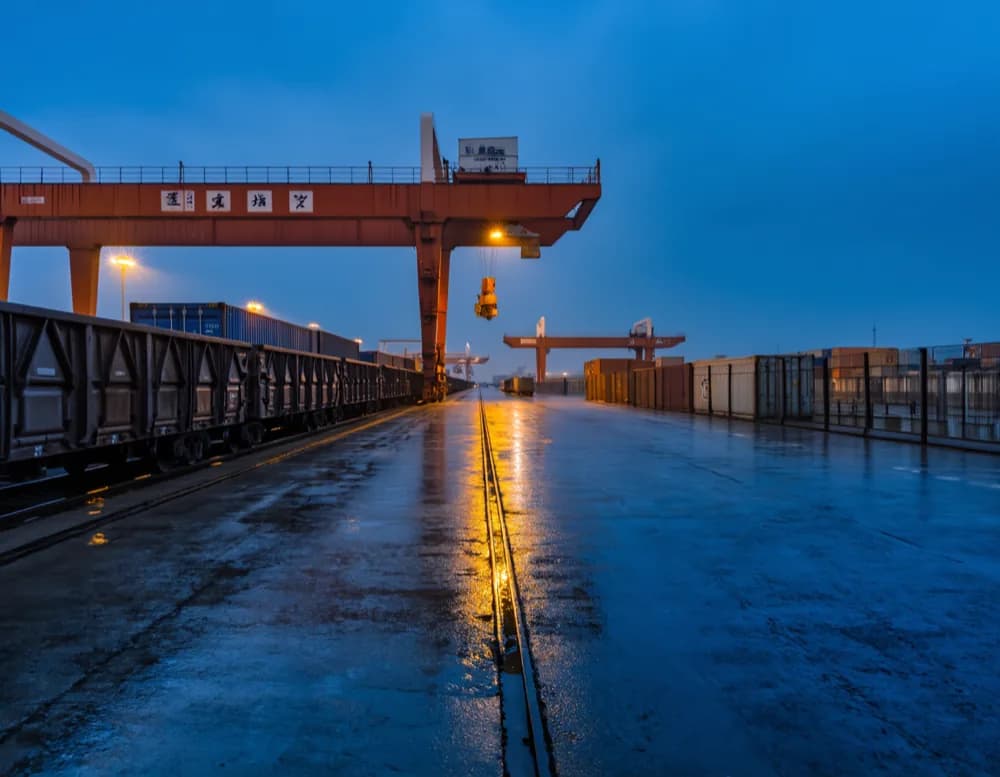
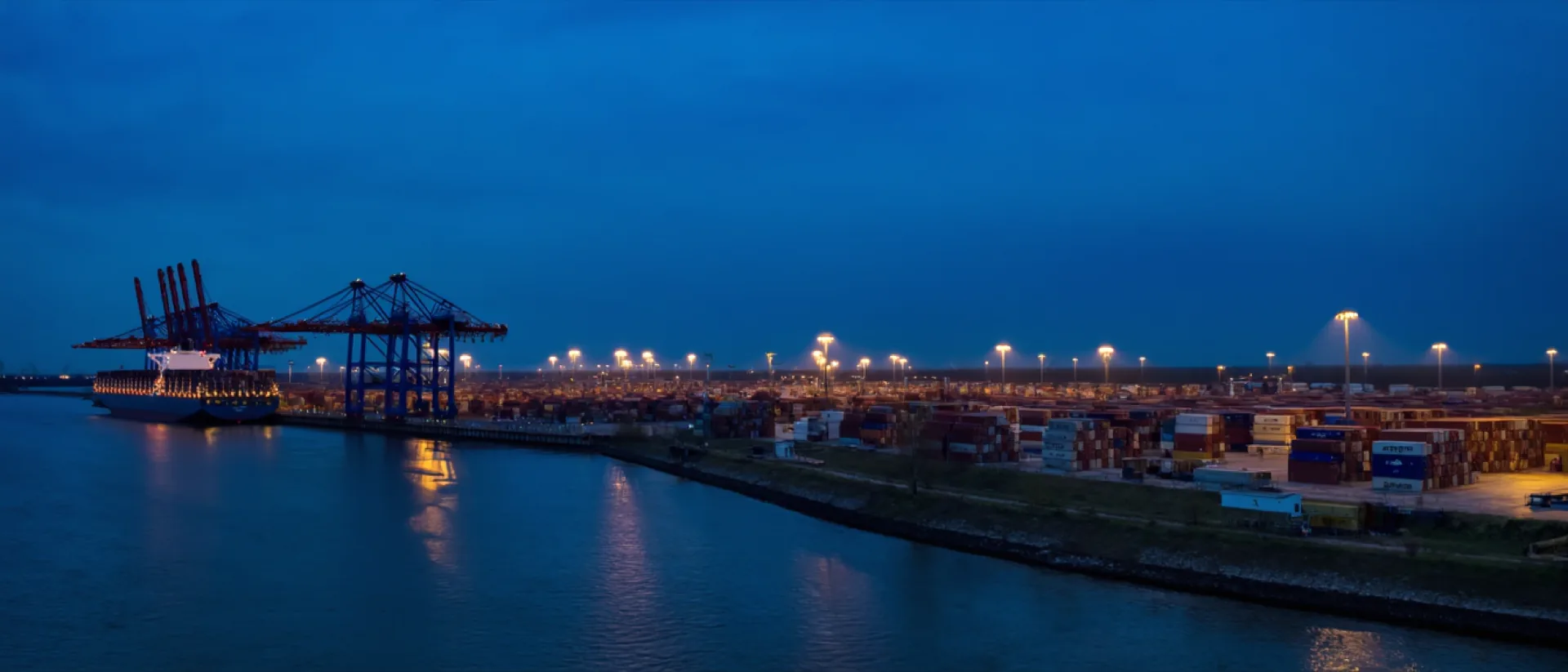
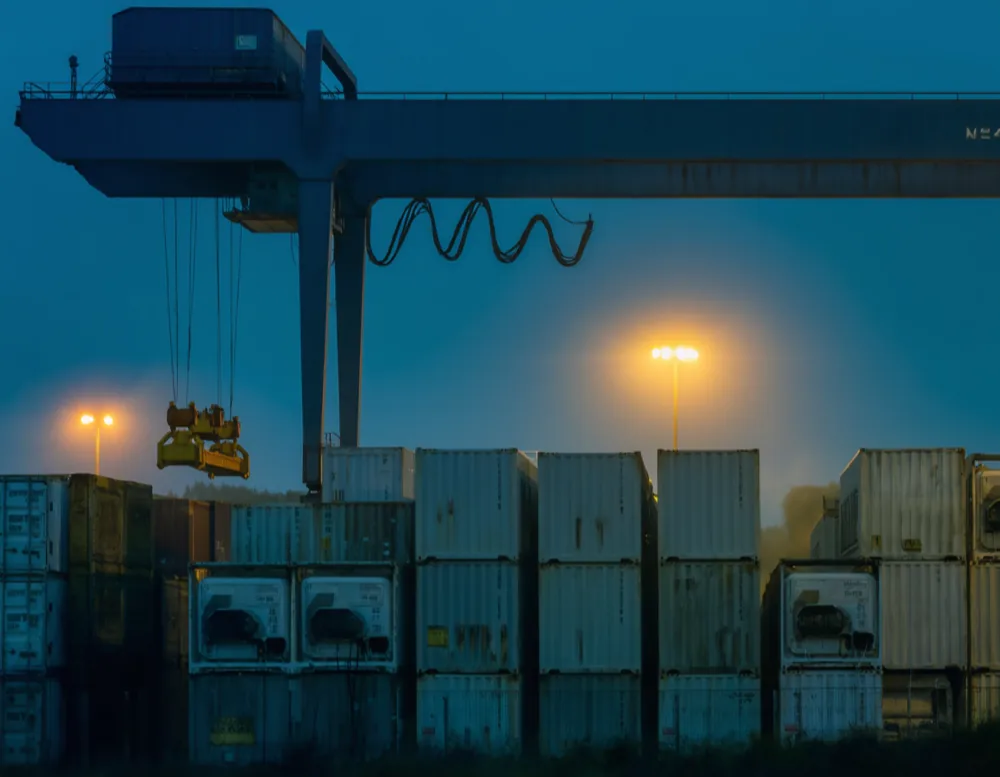
Container terminal on the Elbe at blue hour, a line of gantry cranes above a moored container vessel

Port & supply-chain consulting · Rönneburg, Hamburg

From berth to warehouse, without the wait.

We take a container from the moment its berth window opens to the moment it is unloaded inland, and we take the delay out of it — one measured handover at a time.

Scroll

What we are

A small firm that reads terminal data for a living.

Hafenlogik was founded in 2013 by two people who had spent their working lives on the operational side of the Port of Hamburg — one in terminal planning, one in customs and forwarding. We are still small on purpose. Every engagement is run by a partner, on site, with access to the data rather than to a summary of it.

We do not sell software, we do not take commission from carriers or forwarders, and we do not resell a methodology. What we sell is a fortnight or two of undivided attention on a bottleneck you already suspect, and a written answer you can act on.

  • Independent

    No carrier, terminal or software vendor pays us a referral fee. Our only revenue is the client fee on the invoice.

  • Operational, not slide-deck

    We measure gate moves, crane cycles, dwell times and reefer plug occupancy on your own systems. Nothing in our reports is an industry benchmark standing in for your data.

  • Fixed price, stated up front

    Three of our four standard engagements are fixed price. You know what the answer costs before we start looking for it.

Since 2013

The numbers we are willing to stand behind.

118

Engagements completed

2.4 m

TEU per year under review, aggregate

17 %

Median reduction in truck turnaround time

3.1 m €

Demurrage & detention avoided, cumulative

Aggregate figures across all engagements since 2013, anonymised. Volumes are stated as bands because our clients' throughput is commercially sensitive and, in most cases, contractually confidential.

Practice areas

Four places where the chain usually breaks.

Most of the delay in a container's journey is created at four handovers. We work on all four, and we are honest about which one your problem actually sits in.

  • Terminal operations

    Terminal operations

    Berth windows, crane productivity, yard density, gate moves.

    We rebuild the picture of a terminal day from your TOS exports: berth window adherence, quay crane moves per hour by shift and by crane, yard density by block, and the gate curve hour by hour. The bottleneck is usually not where the loudest complaint is.
  • Customs & compliance

    Customs & compliance

    ATLAS declarations, AEO status, transit and clearance flow.

    Declaration quality, ATLAS message flow, transit procedures, and the internal controls an AEO authorisation actually requires. We map where a shipment waits for paper rather than for a truck, and rewrite the process so the paper is ready first.

  • Cold chain & reefer

    Cold chain & reefer

    Reefer plug capacity, temperature integrity, risk mapping.

    Reefer plug occupancy against arrival peaks, pre-trip inspection discipline, temperature excursion recording, and the handover points where a chain most often breaks: quay to yard, yard to truck, truck to cold store.

  • Rail-port interface

    Rail-port interface

    Train slots, wagon supply, hinterland shuttles.

    Where the terminal's yard plan and the rail operator's slot plan disagree. Train handling times, wagon supply reliability, shuttle round-trip times to the hinterland hubs, and the shunting time nobody counted.

How an engagement runs

Five steps, four to six weeks, one written answer.

This is the same sequence for a €6,200 risk map and a €14,000 throughput audit. Only the depth changes.

  1. 01Scoping call
  2. 02Data room
  3. 03On site
  4. 04Model and test
  5. 05Report and 90-day review

Step 1 of 5 · 45 minutes, no fee

Scoping call

You describe the symptom. We tell you which of the four practice areas it most likely belongs to, roughly what it will cost to find out, and — often enough — that you do not need us.

Track record

Anonymised, in bands, because that is what we are allowed to publish.

Our clients are terminal operators, forwarders, cold-chain logistics providers and rail operators in the North Range. Their throughput is commercially sensitive, so we publish volume as bands and never name a client. Every figure below is a measured before-and-after from a completed engagement.

SectorAnnual volume bandScopeMeasured result
Container terminal operator1–2 m TEU / yearGate and yard interfaceTruck turnaround time down 21 minutes at peak hour
Freight forwarder, sea-air40–60 k declarations / yearATLAS declaration flowDeclaration rework down from 11% to 4%
Cold-chain logistics provider8–12 k reefer units / yearReefer plug capacity planTemperature excursions during handover down 63%
Rail operator, hinterland shuttle600–900 trains / yearSlot and wagon supplyTrain handling time down 34 minutes per call

Bands, not exact volumes. We will name no client, confirm no client, and deny no client. If you need a reference, ask us in the scoping call and we will ask a past client whether they are willing to speak to you.

Who we work with

Sector marks, not client logos.

We do not publish client logos. Most of our contracts forbid it, and the ones that do not, we still would not. Below is the mix of our engagements by client type since 2013.

  • Terminal operators

    34% of engagements

  • Freight forwarders

    23% of engagements

  • Cold-chain providers

    17% of engagements

  • Rail operators

    13% of engagements

  • Industrial shippers

    8% of engagements

  • Port bodies

    5% of engagements

The board in the footer

Schedule reliability, stated in minutes.

Every page of this site ends with an arrival board. It is a demonstration built from a fixed sample dataset — not a live AIS feed — and it shows the one view we build for every terminal and forwarding client: planned berth window against forecast arrival, with the deviation in minutes. When you can see the deviation, you can plan the gate, the yard and the truck slots around it. When you cannot, you buy demurrage.

Read the schedule-reliability case

Before you call

Questions we get every week.

Do you work outside Hamburg?

Yes. Most of our work is in the North Range — Hamburg, Bremerhaven, Wilhelmshaven, Rotterdam and Antwerp — and we have run engagements in Gdańsk and Koper. Travel outside Hamburg is billed at cost and stated in the proposal.

Will you sign our NDA?

Yes, and we will normally sign yours rather than ask you to sign ours. We work with raw operational data; the confidentiality has to be settled before the data room opens, not after.

Do you implement, or only advise?

We advise, we design the intervention, and we stay for the pilot. We do not staff your operation permanently and we do not project-manage your IT rollout. Where implementation needs hands we say so and step back.

Do you take commission from software vendors?

No. If a TOS module or a slot-booking system is the right answer, we say so and name the options we know, and we take nothing from whoever you choose.

What if the audit finds nothing?

It happens, and we say so in writing. A throughput audit that concludes your terminal is running close to its structural limit is a useful answer — it moves the conversation to capital investment instead of to another improvement programme. The fee is the same.

Start with the free call.

Forty-five minutes, no fee, no deck. Tell us the symptom. We will tell you where it probably sits and what it would cost to be sure.

Book the scoping call